Learning Outcomes:
i. Define the pancreas and explain its role in the digestive process.
ii. Describe the structure of the pancreas, including its head, body, and tail, and the acini and islets of Langerhans.
iii. Explain the exocrine function of the pancreas, focusing on the production and secretion of digestive enzymes.
iv. Discuss the specific roles of various pancreatic digestive enzymes, including amylase, trypsin, chymotrypsin, and lipase.
v. Analyze the significance of the pancreas in efficient digestion of carbohydrates, proteins, and fats.
i. The Pancreas: A Versatile Gland with a Digestive Focus
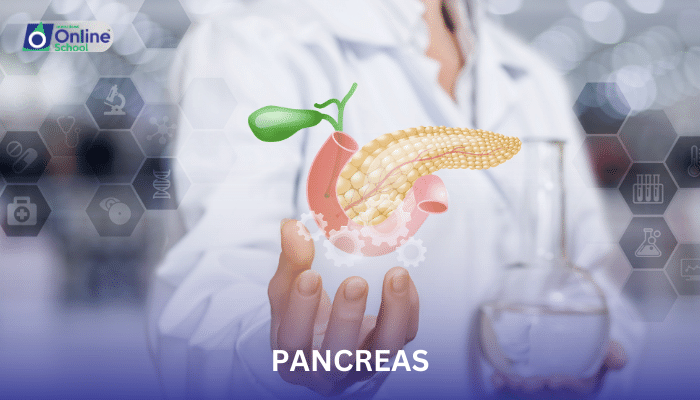
The pancreas, an elongated, flat organ located behind the stomach in the upper abdomen, plays a crucial role in digestion. It functions as both an exocrine gland and an endocrine gland.
Exocrine gland: The exocrine function of the pancreas is responsible for producing and secreting digestive enzymes into the small intestine.
Endocrine gland: The endocrine function of the pancreas is responsible for producing and secreting hormones, such as insulin and glucagon, which regulate blood sugar levels.
ii. Structure and Organization: A Tapestry of Acini and Islets
The pancreas is divided into three main parts: the head, the body, and the tail:
Head: The head is the widest part of the pancreas, located at the junction of the stomach and the small intestine.
Body: The body is the middle section of the pancreas, extending from the head towards the tail.
Tail: The tail is the narrowest part of the pancreas, tapering towards the spleen.
The pancreas is composed of two types of glands:
Acini: Acini are clusters of cells that produce and secrete digestive enzymes.
Islets of Langerhans: Islets of Langerhans are scattered clusters of cells that produce and secrete hormones, primarily insulin and glucagon.
iii. Exocrine Function: A Symphony of Digestive Enzymes
The exocrine function of the pancreas is essential for efficient digestion:
Digestive enzyme production: The acini of the pancreas produce a variety of digestive enzymes, including amylase, trypsin, chymotrypsin, and lipase.
Enzyme secretion: Digestive enzymes are secreted into a network of ducts within the pancreas and eventually reach the small intestine through the pancreatic duct.
iv. Specific Roles of Pancreatic Digestive Enzymes: Tailoring Digestion
Each pancreatic digestive enzyme plays a specific role in breaking down different food components:
Amylase: Amylase breaks down starch, a complex carbohydrate, into simpler sugars called maltose and dextrin.
Trypsin: Trypsin breaks down proteins into smaller peptides.
Chymotrypsin: Chymotrypsin further breaks down peptides into even smaller amino acids.
Lipase: Lipase breaks down fats into fatty acids and glycerol.
Significance of Pancreatic Enzymes in Digestion: A Digestive Quartet
Pancreatic digestive enzymes play a critical role in the efficient digestion of carbohydrates, proteins, and fats:
Carbohydrate digestion: Amylase initiates the breakdown of starch, preparing it for further digestion by enzymes in the small intestine.
Protein digestion: Trypsin and chymotrypsin work together to break down proteins into amino acids, the building blocks of proteins.
Fat digestion: Lipase breaks down fats into fatty acids and glycerol, allowing them to be absorbed by the small intestine.
The pancreas, a versatile organ with both exocrine and endocrine functions, plays a pivotal role in digestion. Its exocrine function is responsible for producing and secreting a variety of digestive enzymes, including amylase, trypsin, chymotrypsin, and lipase, which are crucial for the efficient breakdown of carbohydrates, proteins, and fats. The pancreas's contribution to digestion ensures that nutrients are extracted from food and utilized by the body for energy, growth, and repair. Understanding the physiology of the pancreas and its digestive enzymes provides valuable insights into human nutrition and the importance of a healthy digestive system.
